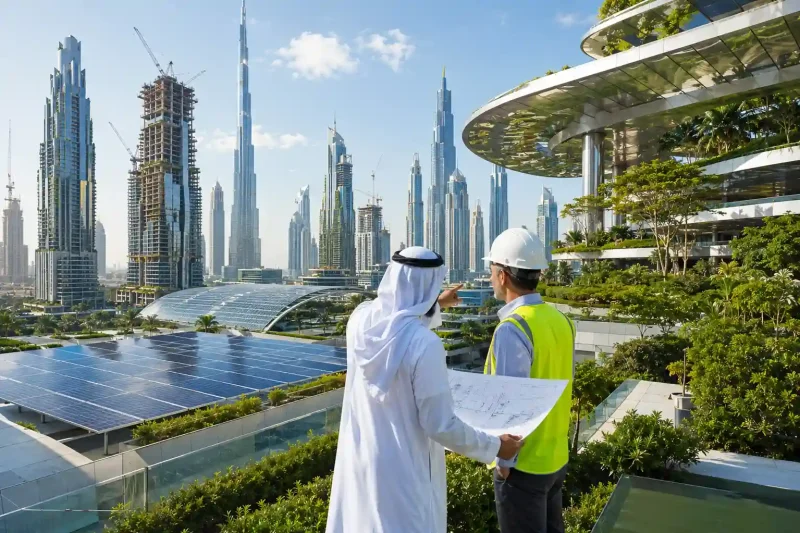

Dubai has become one of the leading cities in the Middle East for sustainable urban development and environmentally responsible construction practices. As the UAE continues investing in smart infrastructure and energy-efficient communities, green building regulations in Dubai now play a major role in shaping modern construction projects.
Government authorities have introduced sustainability-focused standards to reduce energy consumption, improve environmental performance, and support long-term urban sustainability goals. These regulations affect residential, commercial, industrial, and infrastructure developments across Dubai.
For contractors, developers, architects, and property investors, understanding Dubai’s green building requirements is essential for maintaining compliance and delivering future-ready projects.
What Are Green Building Regulations?
Green building regulations are construction standards designed to improve environmental sustainability and reduce the ecological impact of buildings.
These regulations focus on:
- Energy efficiency
- Water conservation
- Sustainable construction materials
- Indoor environmental quality
- Waste reduction
- Carbon footprint reduction
- Efficient cooling systems
The goal is to create healthier, more efficient, and environmentally responsible buildings that support long-term sustainability.
Why Dubai Introduced Green Building Regulations
Rapid urban growth and large-scale infrastructure expansion increased the need for sustainable construction policies across Dubai.
The government introduced environmental regulations to:
- Reduce energy consumption
- Improve resource efficiency
- Lower environmental impact
- Support climate sustainability goals
- Enhance long-term urban planning
- Promote sustainable real estate development
Green construction standards also support the UAE’s broader smart city and sustainability strategies connected to smart city projects in UAE.
Dubai Green Building Regulations and Specifications (DGBR)
Dubai Municipality introduced the Dubai Green Building Regulations and Specifications (DGBR) to establish sustainability requirements for new developments.
These standards apply to many types of construction projects, including:
- Residential buildings
- Commercial developments
- Hotels
- Government facilities
- Mixed-use developments
- Industrial projects
The regulations cover multiple aspects of building design, construction, and operational performance.
Key Areas Covered by Green Building Regulations
Energy Efficiency
Buildings must meet energy performance standards designed to reduce electricity consumption and improve cooling efficiency.
Requirements may involve:
- High-performance insulation
- Energy-efficient lighting
- Smart cooling systems
- Solar shading solutions
- Efficient HVAC systems
Water Conservation
Dubai’s sustainability strategy places strong emphasis on water efficiency.
Developments may include:
- Low-flow plumbing fixtures
- Water recycling systems
- Efficient irrigation systems
- Landscape water management
Sustainable Materials
Contractors are encouraged to use environmentally responsible construction materials that reduce environmental impact and improve long-term efficiency.
Indoor Environmental Quality
Modern green buildings also focus on occupant comfort and indoor air quality through ventilation improvements and healthier building materials.
Impact on Construction Companies
Green building regulations significantly influence how contractors design and execute projects in Dubai.
Construction companies now need expertise in:
- Sustainable materials
- Energy-efficient engineering
- Environmental compliance
- Smart building technologies
- Green certification systems
Many businesses entering the market through construction company setup in Dubai increasingly focus on sustainability-focused construction services to remain competitive.
Importance of Sustainable Project Planning
Green compliance requirements make detailed planning more important than ever in construction projects.
Modern contractors often rely on structured technical documentation systems similar to those discussed in BBC in construction project coordination and construction planning processes.
Project planning may include:
- Environmental assessments
- Energy modeling
- Material performance analysis
- Waste management planning
- Sustainability reporting
Role of Green Regulations in Smart Cities
Sustainable construction standards are closely connected to Dubai’s smart city development initiatives.
Modern smart communities often integrate:
- Smart energy systems
- AI-powered building management
- Renewable energy solutions
- Automated cooling technologies
- Smart water management systems
These technologies help improve urban efficiency while supporting environmental sustainability goals.
Green Building Compliance and Permits
Developers must often provide sustainability documentation during the project approval process.
Green compliance requirements may include:
- Energy calculations
- Environmental reports
- Material specifications
- Water efficiency planning
- Cooling system documentation
Understanding the building permit process in Dubai is essential because sustainability compliance now forms part of many approval procedures.
How Green Regulations Affect Construction Costs
Sustainable construction features may increase initial development costs, but they often provide long-term operational savings.
Green buildings can reduce:
- Electricity consumption
- Cooling expenses
- Water usage
- Maintenance costs
Developers planning residential projects frequently compare villa construction cost in UAE while evaluating the additional investment required for sustainable technologies and energy-efficient systems.
Growth of Sustainable Construction in UAE
The UAE construction market is rapidly moving toward environmentally responsible development practices.
Major sustainability trends include:
- Net-zero buildings
- Solar energy integration
- Smart cooling systems
- Eco-friendly construction materials
- Energy-efficient infrastructure
- Digital environmental monitoring
These changes are also shaping broader Dubai construction market trends 2026 as developers prioritize sustainability and operational efficiency.
Infrastructure Projects and Sustainability
Green regulations are not limited to residential and commercial buildings. Infrastructure developments increasingly include sustainability-focused requirements as well.
Modern infrastructure projects in UAE 2026 are expected to incorporate:
- Energy-efficient transport systems
- Smart utility management
- Sustainable public infrastructure
- Low-carbon engineering solutions
This shift is creating strong demand for contractors with expertise in sustainable engineering and environmental compliance.
Benefits of Green Buildings in Dubai
Green construction offers several long-term advantages for developers, property owners, and residents.
Benefits may include:
- Lower operational costs
- Improved property value
- Better energy efficiency
- Enhanced indoor comfort
- Reduced environmental impact
- Stronger long-term sustainability
Many modern buyers and investors now actively prefer environmentally responsible properties and sustainable communities.
Final Thoughts
Green building regulations in Dubai are transforming the construction industry by encouraging sustainable development, energy efficiency, and environmentally responsible urban planning.
As the UAE continues investing in smart infrastructure and future-ready cities, sustainability compliance is becoming increasingly important for contractors, developers, investors, and property owners.
Companies that understand green construction standards and adopt sustainable building practices are likely to remain highly competitive in Dubai’s evolving construction market.
For official sustainability standards and environmental construction guidelines, the Dubai Municipality official website provides updated regulatory information and technical resources.