
The mobility industry is evolving from a collection of individual transportation services into increasingly connected digital ecosystems. For mobility technology companies, this creates an opportunity to build platforms that can support multiple services, serve different user needs, and develop a business model capable of adapting across markets.
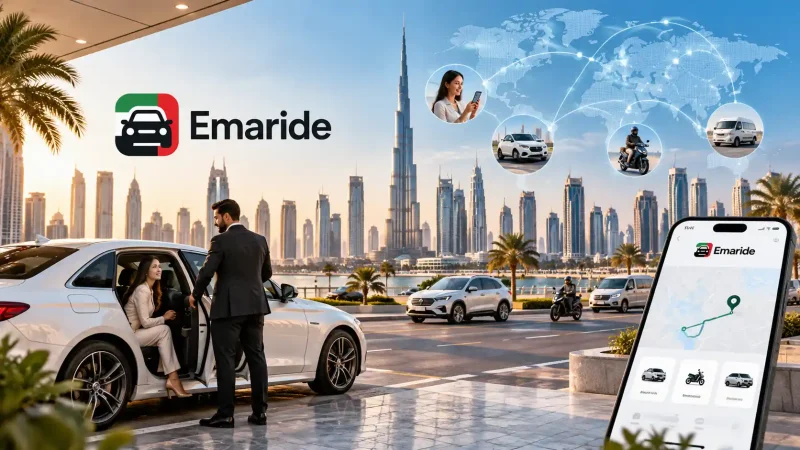
Emaride is a UAE-based mobility technology company developing a multi-market platform around this broader vision. Rather than positioning mobility as a single-purpose ride-hailing service, the company is developing a model that brings multiple mobility services, drivers, passengers, technology, and platform operations into a connected ecosystem.
Building Around a Multi-Service Mobility Model
A central part of Emaride’s business vision is the development of a multi-service mobility platform. This approach is different from building a business around only one transportation use case. A broader platform can be designed to support different mobility requirements while providing a common technological and operational foundation.
The advantage of this model is its ability to create a connected ecosystem. Instead of treating every mobility service as an isolated product, a platform can provide shared infrastructure for users, drivers, technology, and operational processes.
For Emaride, this platform approach is being developed as part of a longer-term mobility strategy. The objective is to create an adaptable business framework that can support the development of multiple services while maintaining a consistent platform experience.
A Driver-First Business Philosophy
Drivers are a fundamental part of the mobility ecosystem, making the relationship between a mobility platform and the drivers who use or may join it an important business consideration. Emaride’s driver-first philosophy places this relationship at the center of its platform thinking.
A driver-first model means considering the platform from the perspective of the people who provide mobility services. Technology, workflows, platform processes, and service design can be developed with driver requirements in mind rather than treating drivers as an element added after the passenger experience has been designed.
This philosophy also fits into Emaride’s wider business model. A multi-service mobility platform depends on an ecosystem in which drivers and passengers are connected through digital infrastructure. Developing that ecosystem requires attention to both sides of the platform and the way they interact.
From a Mobility Service to a Platform Ecosystem
Emaride’s business vision is centered on the idea of a platform rather than a standalone transportation product. This distinction is important because a platform can provide the foundation for expanding services over time.
At the core of such an ecosystem are several connected elements: drivers, passengers, mobility services, technology, and operational processes. The platform provides a framework through which these elements can interact and evolve.
This creates a different way of thinking about mobility businesses. Instead of measuring the value of a platform only through individual journeys, the broader business model considers how effectively the underlying ecosystem can support different services and participants.
For Emaride, developing this ecosystem is part of the company’s longer-term strategy. The platform is being designed with flexibility in mind so that mobility services can develop within a common technological and business framework.
Technology Supporting the Business Model
Although the focus of Emaride’s vision is broader than technology alone, digital infrastructure remains an important part of the platform model. A multi-service mobility business requires technology that can connect different functions while supporting the needs of drivers and passengers.
The technology being developed around the platform is intended to support areas such as service coordination, pricing processes, operational workflows, and interactions between different participants in the mobility ecosystem.
These capabilities should be understood as part of the platform’s development strategy rather than as claims about every feature already being commercially deployed. The underlying objective is to create technology that can support the business as its mobility ecosystem develops.
Designing for Expansion Beyond One Market
Emaride’s vision extends beyond establishing a mobility technology platform in a single market. The company is developing a multi-market platform with an international expansion perspective.
For a mobility business, entering additional markets requires more than replicating an existing service. Transportation requirements, customer expectations, operating environments, and local market structures can differ from one location to another. A scalable platform therefore needs to be adaptable enough to support different market conditions.
This is one reason a platform-based business model can be valuable for international growth. A common technological foundation can provide consistency, while individual markets can be approached according to their own mobility requirements.
Emaride’s international expansion vision is built around this principle. The company is developing a platform intended to provide a foundation that can evolve as it enters and evaluates different markets.
Creating a Scalable Business Foundation
Scalability in mobility is not only a technology question. It also involves the ability of a business model to accommodate additional services, users, operational requirements, and markets without losing the underlying structure of the platform.
Emaride’s multi-service approach provides a framework for thinking about that scalability from the beginning. Instead of developing each potential mobility service independently, the platform concept is designed around shared infrastructure and an interconnected ecosystem.
The driver-first philosophy also contributes to this business framework. As the platform develops, understanding the requirements of drivers remains part of the company’s approach to building a sustainable mobility ecosystem.
A Long-Term Vision for Mobility
The mobility sector is becoming increasingly platform-driven, with technology connecting transportation services, drivers, passengers, and business operations. This creates opportunities for companies that approach mobility as an ecosystem rather than a single service.
Emaride’s vision is centered on that broader opportunity. As a UAE-based mobility technology company developing a multi-market platform, it is building around a multi-service model, a driver-first business philosophy, and an ecosystem designed with future expansion in mind.
The emphasis is therefore not simply on creating another transportation service. It is on developing the business and technological foundation needed to support a broader mobility platform over time.
As Emaride continues developing its platform, its UAE foundation provides a starting point for a vision that extends beyond one market. The combination of multi-service mobility, driver-focused thinking, connected platform infrastructure, and international expansion creates the framework for a business model designed to evolve alongside the wider mobility industry.