
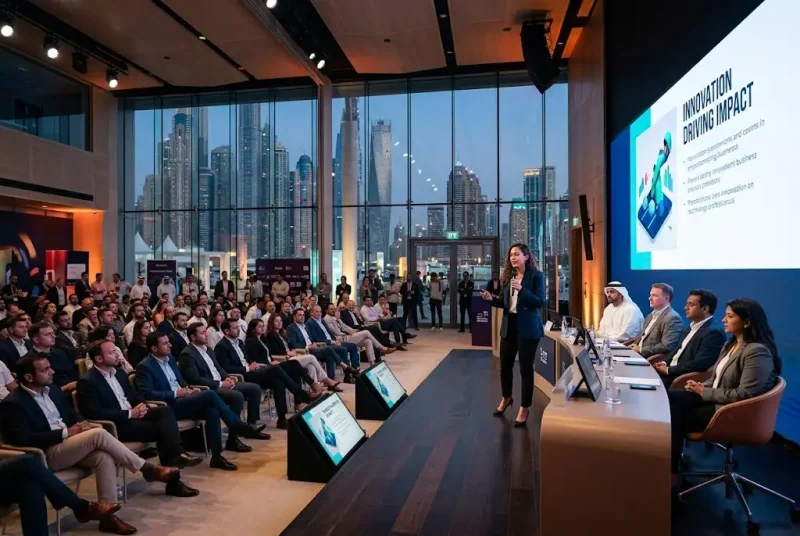

Startup pitch events in Dubai give founders an opportunity to present business ideas, demonstrate products, meet investors and receive feedback from experienced entrepreneurs. For an early-stage company, a well-selected pitch event can open doors to funding conversations, strategic partnerships, customers and valuable introductions within Dubai’s startup ecosystem.
However, not every pitch event is designed for the same type of startup. Some focus on technology and innovation, while others are aimed at specific industries, university founders, small businesses or investment-ready companies. Understanding the event format and audience is therefore essential before applying.
This guide explains how startup pitch events work, what founders should look for, how to prepare a strong pitch and how to make the most of networking opportunities before and after the event.
Why Startup Pitch Events in Dubai Matter
Dubai has a diverse entrepreneurial ecosystem where startups can connect with investors, accelerators, incubators, corporations and fellow founders. Pitch events bring several of these groups together in a structured environment.
For founders, the biggest benefit is often not simply winning a competition. A pitch can create an introduction to an investor, generate feedback on a business model or help a startup gain visibility among potential partners.
Pitch events can also help founders practise explaining their business clearly. The ability to communicate a product, market opportunity and growth strategy in a concise way is valuable during investor meetings as well as customer and partnership discussions.
Entrepreneurs can complement pitch-event participation with broader research into startup networking events in UAE to build relationships outside formal competitions.
What Are Startup Pitch Events?
A startup pitch event is a gathering where selected founders present their businesses to a panel, investors, judges or a wider professional audience. The presentation usually follows a fixed format and time limit.
Depending on the organiser, startups may be required to submit an application before being selected. Judges may evaluate the idea, market opportunity, business model, traction, team and growth potential.
Some events are structured as competitions, while others are designed primarily to connect founders with investors. The distinction matters because the best event for fundraising may not be the same as the best event for exposure or learning.
Types of Startup Pitch Events in Dubai
Founders can encounter several different pitch-event formats across Dubai.
Investor Pitch Events
These events are designed around introductions between startups and investors. They can be particularly useful for companies that already have a developed business model and are preparing for a funding round.
Founders should research the participating investors carefully. A large investor audience is less useful if none of the investors focus on the startup’s sector or stage.
Startup Competitions
Startup competitions usually involve multiple founders presenting ideas or businesses before a judging panel. Winners may receive prizes, visibility, mentorship or introductions.
Even when there is no direct investment, participating can provide useful experience in presenting under time pressure.
Technology Pitch Events
Technology-focused pitch events are suitable for startups working in areas such as artificial intelligence, SaaS, fintech, cybersecurity, robotics and digital platforms.
Dubai’s technology ecosystem provides additional opportunities through major conferences and startup gatherings. Entrepreneurs can also explore AI startup opportunities in Dubai when evaluating the technology market.
Corporate Startup Challenges
Some corporations organise challenges where startups propose solutions to specific business problems. These events can be particularly valuable because a successful relationship may lead to a pilot project or commercial partnership.
University and Innovation Competitions
Student founders and university-linked startups may encounter pitch competitions focused on innovation, entrepreneurship and new technologies. These events can provide early exposure and connections with mentors or ecosystem organisations.
Who Should Attend Startup Pitch Events?
Pitch events are most useful for founders who have a clear business proposition and know what they want from the event.
An idea-stage entrepreneur may attend primarily to learn and receive feedback, while a startup with an existing product and customers may be ready to approach investors more directly.
Before applying, assess whether your startup is ready to present publicly. If your business model is still changing significantly, a founder meetup or incubator programme may provide more appropriate support.
Entrepreneurs can also research startup incubators in Dubai if they need structured development before pursuing investment-focused events.
How to Find Startup Pitch Events in Dubai
Pitch events can be organised by startup communities, incubators, accelerators, universities, corporations, investors and conference organisers.
- Follow established startup communities.
- Check incubator and accelerator programmes.
- Review technology and entrepreneurship event calendars.
- Follow major Dubai business conferences.
- Monitor investor and innovation networks.
- Check corporate startup challenge announcements.
Always verify the event through the organiser’s official website. Check application deadlines, eligibility criteria, pitch format, venue and whether the event is open to the public or limited to selected founders.
How to Choose the Right Pitch Event
Founders should evaluate pitch opportunities strategically rather than applying to every competition.
Investor Relevance
If fundraising is the objective, investigate who will be watching the pitches. Look for investors whose interests, geography and investment stage align with your startup.
Industry Fit
A sector-specific event can provide more relevant feedback and connections. A fintech startup, for example, may gain more from a financial technology event than from a general entrepreneurship competition.
Startup Stage
Some competitions focus on ideas, while others expect revenue, users or established market traction. Make sure your startup meets the expected stage before applying.
Potential Outcomes
Look beyond the headline prize. Consider whether the event provides investor introductions, mentorship, customer access, media exposure or corporate partnerships.
How to Prepare a Startup Pitch
A strong pitch should communicate the most important aspects of the business quickly. The exact format depends on the event, but founders should generally be prepared to explain the following.
The Problem
Start by explaining the customer problem clearly. The audience should understand why the problem matters and who experiences it.
The Solution
Explain how your product or service addresses the problem. Avoid unnecessary technical detail unless it is essential to understanding the value.
The Market
Describe the customers you are targeting and the market opportunity. Use credible information and avoid unsupported market-size claims.
The Business Model
Explain how the startup makes money or intends to generate revenue. Investors and judges need to understand how the business can become commercially sustainable.
Traction
If available, present meaningful evidence such as customers, revenue, partnerships, product adoption or other relevant milestones. Focus on information that demonstrates progress.
The Team
Explain why the founders and key team members are capable of executing the business plan. Relevant experience can help establish credibility.
The Funding Requirement
If you are raising capital, explain how much funding you are seeking and how you intend to use it. The explanation should connect funding requirements to realistic business milestones.
How Long Should a Startup Pitch Be?
Pitch events often impose strict time limits. The organiser’s rules should always take priority, but founders should practise delivering the complete presentation within the allocated time.
Do not attempt to include every detail about the company. A concise presentation with a clear story is generally easier for judges and investors to understand.
Practise answering questions as well. A strong presentation can still lose momentum if the founder cannot clearly explain important assumptions, pricing, competition or customer demand during the Q&A session.
Common Startup Pitch Mistakes
Several mistakes can weaken an otherwise promising pitch.
- Trying to explain too much in a short presentation.
- Using unsupported statistics or exaggerated claims.
- Focusing heavily on product features instead of customer value.
- Ignoring competitors.
- Providing an unclear revenue model.
- Giving unrealistic growth projections.
- Failing to explain the funding requirement.
- Reading directly from presentation slides.
- Ignoring the event’s time limit.
Founders should also avoid treating every judge’s question as criticism. Questions can reveal where the pitch needs greater clarity and may highlight assumptions that investors want to examine further.
How Networking Works at Pitch Events
The formal pitch is only one part of the opportunity. Conversations before and after the presentations can be equally important.
Founders should identify relevant investors, mentors, corporate representatives and other entrepreneurs before the event. A short introduction can create the basis for a longer conversation after the pitch.
Do not approach every person with the same fundraising request. Instead, determine whether there is a genuine fit and tailor the conversation accordingly.
For entrepreneurs who want more informal networking opportunities, entrepreneur meetups in Dubai can complement pitch competitions.
What Investors Look for in a Startup Pitch
Investor preferences vary considerably, so there is no universal checklist. However, investors generally want to understand whether a startup addresses a meaningful problem, has a credible route to market and has a team capable of executing the plan.
They may also examine customer evidence, competitive positioning, revenue potential, capital requirements and the startup’s ability to scale.
Founders should therefore understand their own numbers and assumptions rather than relying entirely on a polished slide deck.
Startup Pitch Events and Funding Opportunities
Pitch events can form part of a broader fundraising strategy. A successful introduction may lead to an investor meeting, but funding decisions usually require additional due diligence and discussions.
Founders should therefore prepare the supporting information they may need after the event, including business details, financial information, customer evidence and relevant company documentation.
Those researching the wider funding environment can also explore funding opportunities for UAE startups.
How Accelerators Can Prepare Founders for Pitching
Accelerator programmes can help startups develop their business models and improve investor presentations. They may provide mentors, workshops, investor introductions and opportunities to practise pitching.
For founders who are not yet ready for a formal pitch competition, an accelerator can be a useful intermediate step.
Entrepreneurs can compare programmes through resources covering startup accelerators in the UAE.
How to Follow Up After a Pitch Event
Following up quickly and professionally can help maintain momentum. If you had a meaningful conversation with an investor, mentor or potential partner, send a concise personalised message.
Reference the discussion and provide any information that was requested. If appropriate, suggest a specific next step such as a call, meeting or product demonstration.
Do not assume that a lack of immediate investment means the relationship has no value. A contact may become relevant later as the startup develops or may introduce you to another person.
How to Measure the Value of a Pitch Event
Winning a competition is not the only measure of success. Founders should evaluate whether the event produced useful outcomes.
- Relevant investor conversations
- Qualified customer introductions
- Potential partnerships
- Mentor relationships
- Useful product or business feedback
- Follow-up meetings
- Greater visibility within the startup ecosystem
Tracking these outcomes helps founders determine which types of events deserve more attention in the future.
Other Business Events for Dubai Startups
Pitch competitions are only one part of the city’s startup ecosystem. Founders can also attend conferences, trade shows, networking gatherings, technology events and business expos.
The broader business expo events in UAE ecosystem can help startups find potential customers and partners, while larger technology events can provide access to international companies and investors.
Founders can also return to the wider guide covering the top business events in Dubai when planning their annual networking strategy.
Final Thoughts on Startup Pitch Events in Dubai
Startup pitch events in Dubai can provide founders with valuable opportunities to present their businesses, receive feedback and build relationships with investors, mentors, customers and strategic partners.
The strongest results come from choosing events carefully and preparing well. Research the audience, understand the selection criteria, practise your presentation and make sure you can explain your business model and funding requirements clearly.
Most importantly, treat a pitch event as the beginning of a relationship rather than the final objective. Whether you win a competition or simply meet the right person, thoughtful follow-up can turn a short event interaction into a meaningful business opportunity.
Event dates, application requirements, judges, investors and eligibility criteria can change. Always confirm the latest information through the official organiser before applying or attending.
For broader official information about entrepreneurship and business development in the UAE, consult the UAE Ministry of Economy & Tourism.